
Back to Back to
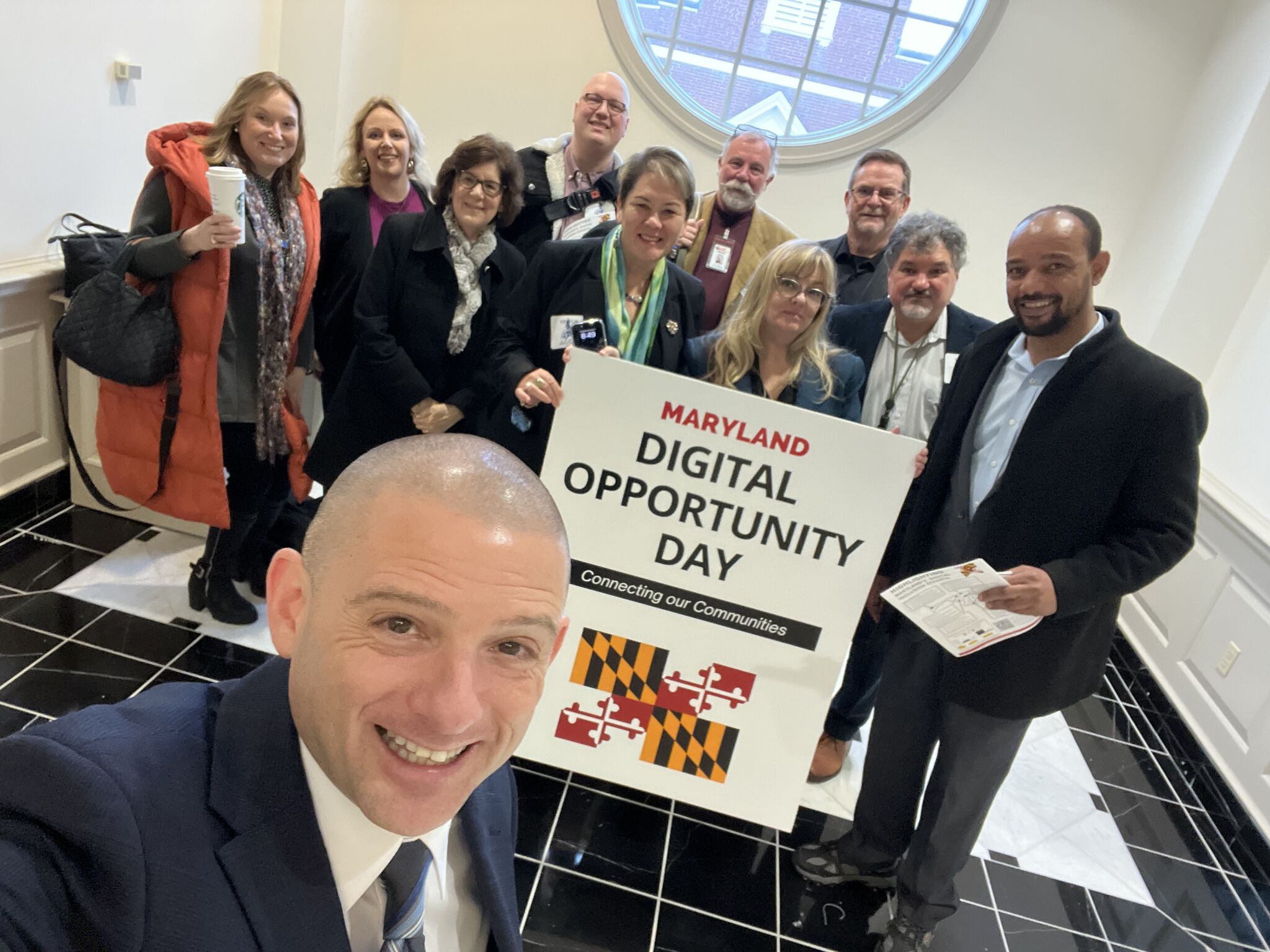
Picture of MDEC Members at the 2025 Digital Opportunity Day in Annapolis.

Image Credit: Image by Josh Bokee

Author: Julie Slivka

Dec 22, 2025

Marylanders Online Partners


Marylanders Online continues to grow its impact through meaningful partnerships with more than 270 organizations at the local, county, state, regional, and national levels. These collaborations are advancing digital opportunities that support vocational training, civic engagement, social connection, online safety, and digital skills development across the state. Each partnership emphasizes culturally and linguistically relevant approaches that meet communities where they are. Many of these partners are involved in the Maryland Digital Equity Coalition (MDEC), which fosters statewide digital inclusion efforts to build a more connected, informed, and empowered Maryland.

Our partners include:

A Mother's Cry

A Prosperous Tomorrow

AARP -  Senior Planet

Allegany County Government

Allegany County Public Library

America's Hauling for Hope

American Connection Corps

American Job Center of Washington County

AmeriCorps

Apple

Applied Technology Services

Asylee Women Enterprise

Baltimore City Community College - Refugee Youth Project

Baltimore City Information Technology

Baltimore City Recreation & Parks

Baltimore County Department on Aging

Baltimore County Diversity, Equity, and Inclusion Employee Advisory Council

Baltimore County Government - Recreation Activity Centers

Baltimore County Public Library

Baltimore Digital Equity Coalition (BDEC)

Benton Institute for Broadband & Society

Berlin 50 plus Center

Blindshell

Boys & Girls Club of Washington County

Boys and Girls Club of Southern Maryland

Breezeline

Brentwood Apartments

Bridges

Brookings Institution

Bykota Senior Center

Calvert County 4-H

Calvert County Community Resources

Calvert County Office of the Administrator

Calvert County Office of Aging

Calvert County Public Library

Calvert Pines Senior Center

Carevocacy

Caring Carroll

Carroll Digital Equity Coalition

Carroll Technology & Innovation Council

CASA

CASH Campaign of Maryland

Cause Engagement Associates

Cecil County Library

Center for Democracy & Technology

Central Baltimore Partnership

Charles County Community Services

Charles County Department of Community Resources

Charles County Office Of Aging

Charles County Police Department

Charles County Public Library

Charles County Public Schools

Charles County Sheriff's Department

Charles County Teen Court

Chesapeake Cares Food Pantry

Chesapeake Drone Ag

City of College Park

City of Frostburg Housing Authority

Town of Hagerstown Housing Authority

City of Hyattsville

City of Salisbury

Closing The Gap Coalition

Coaching Salud Holistica

Comcast

CommonHealth ACTION

Community Action Council

Community Development Network of Maryland (CND)

Community Foundation of the Eastern Shore, Inc.

Coppin State University

Davis Hill Development

Department of Technology and Enterprise Business Solutions

Digital Harbor Foundation

Digital Harbor Foundation - Project Waves

digitalLIFT

Dorchester County Library

EducationSuperHighway

EduMatch

El Centro Latino de Frederick

Enoch Pratt Free Library

Enterprise Residential

Familia Solutions

Federal Communications Commission

Garrett County Government

Garrett County Public Library

Garrett County Senior Center

Gilchrist Immigrant Resource Center

Girls Inc. of Washington County

Goodwill

Googl

Governor's Workforce Development Board

Grace House

Hable

Hagerstown Community College

Hagerstown Housing Authority

Hagerstown Housing Authority of Washington County

HALO Ministry

Harford County Department of Social Services

Harford County Department of Social Services - Havre De Grace

Health Tequity

Hearing Loss Association of America (HLAA)

Hereford Senior Center

Hollywood Elementary School Parents Association

Horizon Farm Credit

Housing Authority of Allegany County

Housing Authority of Baltimore City

Housing Authority of the City of Frostburg

Howard County Community College

Howard County Office of Aging and Independence

Howard County Office of Children and Families

Howard County Office of Veterans and Military Families

Image Center for People with Disabilities

Institute for Trustworthy AI in Law and Society (TRAILS)

Institute of Museum and Library Services

International High School

Johns Hopkins - 21st Century Cities Initiative

Johns Hopkins - Center for Health Disparities Solutions

Kent County Government

Kent County Public Library

KID Museum of Bethesda

Lakeland Civic Association

Latino Economic Development Center

Lead for America

LEAD Maryland Foundation

Lead4Life

LGBTQ Tech

Libraries 4 Digital Equity

Lifestyles of Southern Maryland

Living Change

Lower Shore Health Coalition

MAC Center

Marian House

Maryland Accessible Telecommunications

Maryland Bridges Technical Assistance Center

Maryland Center for Computing Education (MCCE)

Maryland Department of Agriculture

Maryland Department of Disabilities - Information Technology Accessibility Initiative

Maryland Department of Education

Maryland Department of Health  - Developmental Disabilities Administration

Maryland Department of Health - Healthy Heart Living Collaborative

Maryland Department of Housing and Community Development

Maryland Department of Information Technology

Maryland Department of Labor

Maryland Department of Labor - Division of Workforce Development & Adult Learning

Maryland Department of Public Safety and Correctional Services

Maryland Department of Rehabilitative Services

Maryland Digital Equity Coalition (MDEC)

Maryland Library Association

Maryland Rural Development Council

Maryland State Library Agency (MSLA)

Maryland State Library Association

Maryland State Library for the Blind and Print Disabled

Maryland Zoo

MarylandROPTA

Mid Shore Health Improvement Coalition

Minary's Dream Alliance

Montgomery Connects

Montgomery County Government

Montgomery County Public Schools - Wheaton High School

My Tech / Apollo's Dream Foundation

National Active and Retired Federal Employees (NARFE)

National Commission for Health Education Credentialing (NCHEC)

National Digital Education Extension Team (NDEET)

National Digital Inclusion Alliance (NDIA)

National Federation of the Blind (NFB)

New Psalmist Baptist Church

Newton Community Center

North Oaks Senior Living

North Point Senior Living

Northeast Regional Center for Rural Development (NERCRD)

NPower

Office of the Comptroller of Maryland

The Ohio State University

One Language LLC

Penn State Extension

Pennsylvania State University

People's Community Alliance

Pew Charitable Trusts

Pioneer

Prince George's County Memorial Library System

Purple Line Corridor Coalition

Queen Anne's County Government

Queen Anne's County Library

RAZ Mobility

RealSam

Refugee Network of Washington County

Refugee Welcome Network

Residences at Hampstead School

Robert J Fuller House

Robert W. Deutsch Foundation

Rural Maryland Council (RMC)

SafeInHome

Salisbury Library

SanFranciscoo Tech Council

Schools Health & Libraries Broadband (SHLB) Coalition

Science Leaf LLC

Sharp Insights LLC

ShoreRivers

SkillSmart

Snow Hill 50plus Center

Somerset County Libraries

Southern Maryland Regional Library Association (SMRLA)

St Mark's Catholic Church

St. Mary's Department of IT

St. Mary's Office of Aging

St. Mary's Outreach Center

St. Mary's Public Library

State Office of Rural Health

State Office of Policy, Planning, & Innovation (SOPPI)

Sunrise Solar

Talbot County Library

Techstars AI Health Baltimore

Telamon

Telecommunications Access of Maryland - Maryland RELAY

The Arc Maryland

The Arc of Southern Maryland

The CareerCatchers, Inc.

The Laryngectomee Club of Montgomery County, Maryland

The Metamorphosis Community Project, Inc.

Ting Mobile

Tomlin Technology

Town of Hagerstown Housing Authority

Transform Howard

Truist

University of Maryland Medical System

UMD College of Information

UMD Communication Access Services (CAS)

UMD Department of Communication

UMD Office of Community Engagement

UMD School of Public Policy: Do Good Institute

UME - Baltimore County 4-H

UME 4-H - Teens as Teachers

UME Family and Consumer Sciences

UME Precision Agriculture Lab

UME SNAPed

UME Wicomico County 4-H

UME Worcester County 4-H

United Way of Frederick County

University of California, UC Davis School of Medicine

University of Georgia

University of Idaho Extension

University of Maryland - College of Education - Department of Teaching and Learning, Policy and Leadership

University of Maryland - The Universities at Shady Grove

University of Maryland Extension

University of Maryland Institute for Health Computing (UM-IHC)

University of Maryland Medical Intelligent Imaging (UM2ii) Center

University of Maryland School of Medicine

University of Maryland School of Public Health

University of Maryland School of Social Work

University of Maryland School of Social Work Office of Continuing Professional Education

Urban Institute

USDA - Farm Service Agency (FSA)

USDA-  Food and Drug Administration (FDA)

USDA- Foreign Agricultural Service (DF)

Verizon

Washington County Community Action Council

Washington County Free Public Library

Washington County Government

Washington County Public Housing Authority

Western Maryland Consortium

Westminster Overlook

Wheaton Library

Wicomico County Health Department

Wicomico County Partnership for Families and Children

Worcester County Health Department

Worcester County Libraries

Worcester County Public Schools

Key Projects and Impact

4-H Projects in the Digital Age

By integrating digital literacy directly into the animal science program, this initiative fosters youth development in several key areas: financial tracking for managing animal care expenses, marketing skills to showcase their achievements online, and online safety awareness to ensure responsible digital citizenship. By gearing up young minds for success in the modern world of 4-H and animal science, this program equips future generations with the essential tech skills needed to navigate the digital world.

Target Population: Rural Communities - Youth & Older Adults

Number of Individuals Served:  18 youth and 35 Adults

Digital Literacy Skills for Immigrant Afghan Populations

This UME initiative aims to increase the digital skills of the Baltimore City Afghan population to enhance their ability to independently access government resources and personal health information online. By offering group digital skills, over 7-weekly classes in an in-person format, this culturally responsive initiative works to break down the barriers that the Afghan community faces when accessing online services. 

Target Population: Refugees and Immigrant Populations in Baltimore City

Digital Skills & Financial Education and Small Business Ownership for Incarcerated Individuals Nearing Release

This program aims to empower incarcerated individuals with GED certificates by providing targeted training that will help them gain valuable financial literacy skills, explore the intricacies of starting a small business, and learn computer skills to develop a business model for their chosen venture. This comprehensive UME collaborative program equips individuals nearing release with the knowledge and tools needed to pursue financial stability and potentially launch their own businesses upon discharge from incarceration.

Target Population: BIPOC (Black, Indigenous, and People of Color) and Residents of Baltimore County, Ex-Offenders

Number of Individuals Served: 16

Digital Tools for Youth Leadership Development

This program offers mentorship opportunities to older youth by giving them opportunities to lead in-person workshops that foster digital skills in younger participants. This innovative approach provides a two-way learning experience that benefits both groups, allowing youth leaders to develop valuable teaching and leadership skills while equipping younger participants with digital tools to help them build their digital literacy.

Target Population: Youth

Digital Tools for Financial Capability

This program tackles financial literacy by teaching participants the digital skills needed to confidently navigate devices and access online resources. Participants build their proficiency in applications designed to promote financial self-sufficiency and collaboration. By combining digital literacy training with access to financial tools, this initiative fosters a more confident and informed citizenry capable of making sound financial decisions.

Target Population: Marylanders in the counties of Worcester, Wicomico, and Somerset who are disproportionately affected by the digital divide - BIPOC (Black, Indigenous, People of Color), Seniors/Older Adults; Immigrants, People with limited English Language Proficiency/English Language Learners, People with Disabilities, and Residents of Rural Counties.

Digital, Physical, and Financial Literacy & Wellness Program

In partnership with Harford County Department of Social Services, this Family and Consumer Sciences (FCS) initiative aims to address to the inequities brought to light by the pandemic by cultivating digital inclusion through targeted training for two underserved populations: the unemployed and older adults. An FCS Educator used this program to integrate digital literacy into nutrition and financial wellness education. Participants learn to navigate the online world confidently, manage their physical health effectively, and make sound financial decisions to promote well-being in the digital age. Another branch of the program brought digital literacy to older adults through Senior Planet, an initiative from AARP. FCS Educators for this program include Jennifer Dixon Cravens, Carrie Sorenson, Dr. Shauna Henley, Shelita Jackson, and Naimani Staley.

Target Population: Adults ages 18-55 from community partnership with Harford County Department of Social Services- Susquehanna Workforce, Havre De Grace Maryland

Number of Individuals Served: 137

Target Populations: Seniors Citizens Ages 60 and over from community partnership with Woodlawn Senior Center, Woodlawn, Maryland. 

Number of Individuals Served: 87

Total Grant Program Participants served 2023-2024: 224 

FarmerTech

FarmerTech is an intergenerational program involving teens in the 4-H program in Baltimore County. This initiative adapts the Teens as Teachers model and empowers youth to go out into the community to offer technology support to farmers. The goal of this program is to increase digital resource engagement in the farming community, thereby increasing farm revenue and enhancing workforce development, service learning, and public speaking opportunities for teens. Learn more. 

Target Population: Farmers and youth 

Financial Mind$et: Crossing the Economic Chasm with Technology

In collaboration with Calvert County Extension, this program was created to help lower-educated, at-risk youth and low-income families bridge the economic divide by teaching participants financial literacy and essential digital skills. By connecting at-risk youth and families with the necessary resources and tools, they will be able to better navigate the financial landscape and work towards a more promising economic future.

Target Population: Low-education, at-risk youths and low-income families

Number of Individuals Served: 432

Recognizing and Avoiding Scams: An Older Adult Digital Literacy Program

This program is offered in partnership with Carroll County Extension Office and Carroll County Library to equip older adults with the knowledge and tools necessary to navigate the digital world both confidently and safely. This proactive programmatic approach focuses on identifying and safeguarding against common scams, helping seniors build their digital skills, and allowing for greater independence, security, and the ability to enjoy the benefits of technology with peace of mind.

Target Population: Older Adults

Number of Individuals Served: 241

Teen & CyberSeniors Program

Using 4-H’s established “Teens as Teachers” model to deliver classes where youth instruct adults to improve their introductory digital literacy skills, this initiative was offered in partnership with Baltimore County Tech Extension, AARP Senior Planet, CyberSeniors, and 4-H Changemakers.

Target Population: Senior citizens (older adults) across Baltimore County who aim to improve their introductory digital literacy skills.

Key Learnings from the Mini-Grants Initiative

The grant program has revealed several important insights:

  1. Cultural Responsiveness: Tailoring programs to the cultural contexts of target populations enhances engagement and effectiveness.
  2. Mentorship and Leadership: Involving youth in leadership roles not only benefits younger participants but also fosters important skills in youth leaders.
  3. Integrated Learning: Combining digital literacy with other essential skills such as financial literacy and health management results in more holistic benefits.
  4. Addressing the Digital Divide: Special attention is needed to reach underrepresented and digitally marginalized groups effectively.
  5. Adaptability and Flexibility: Programs must be flexible to accommodate changing needs and circumstances of participants.

Implementation Steps

To build on the success of these initiatives, the following steps are recommended:

  1. Expand Reach: Increase outreach efforts to engage more participants, particularly in underserved areas.
  2. Strengthen Partnerships: Collaborate with more local organizations and community leaders to enhance program delivery and impact.
  3. Enhance Training: Continuously update training materials to include the latest digital tools and best practices.
  4. Monitor and Evaluate: Implement robust monitoring and evaluation frameworks to assess program outcomes and identify areas for improvement.
  5. Sustainability: Develop strategies to ensure the sustainability of these initiatives beyond the grant period, including seeking additional funding and resources.

The UME Marylanders Online Mini-Grant program has helped to build digital literacy in diverse communities in Maryland. By addressing the unique needs of different populations and implementing culturally responsive and innovative approaches, these initiatives have empowered individuals with the skills needed to thrive in the digital age. Continued efforts and collaboration are essential to build on this progress and ensure that all Marylanders have the opportunity to benefit from digital inclusion.